
Prepared for 72 Hours Without Power? 7 Ways to Make Your Portuguese Home Blackout-Ready
If you have seen the headlines about the EU asking households to be ready for 72 hours on their own, you are not alone in wondering what that means in practice. The short version: it is a recommendation, not an obligation, and it is not a warning that something is about to happen. But it is a useful prompt to ask a practical question: if the power went off tonight, what in your home would still work on Thursday?
The European Commission's preparedness approach encourages every household to be able to manage for at least three days, because the first 72 hours after a major disruption are when emergency services are busiest and normal supplies can be interrupted. Water, food, medication and a torch are the obvious items. Electricity is the one most people forget, even though it runs your phone, router, fridge, lights, water pump and often your heating or cooling too.
Portugal and Spain were reminded how quickly this can happen during the Iberian blackout of 28 April 2025, when cash machines, payment terminals, traffic lights and mobile networks were affected across both countries. Below are seven steps to make your home more resilient, from the simplest to the most complete. A well-designed battery backup system sits at the centre of most of them.
1. Decide what must stay on
Before buying anything, write down the loads you cannot do without for three days. Most households end up with the same short list:
- Refrigerator and freezer
- Phone and laptop charging, plus the router
- LED lighting in main rooms
- Water pump or pressure system (very common in rural Algarve homes)
- Medical devices, if anyone relies on them
- Gate or garage motor, so you can still get a car out
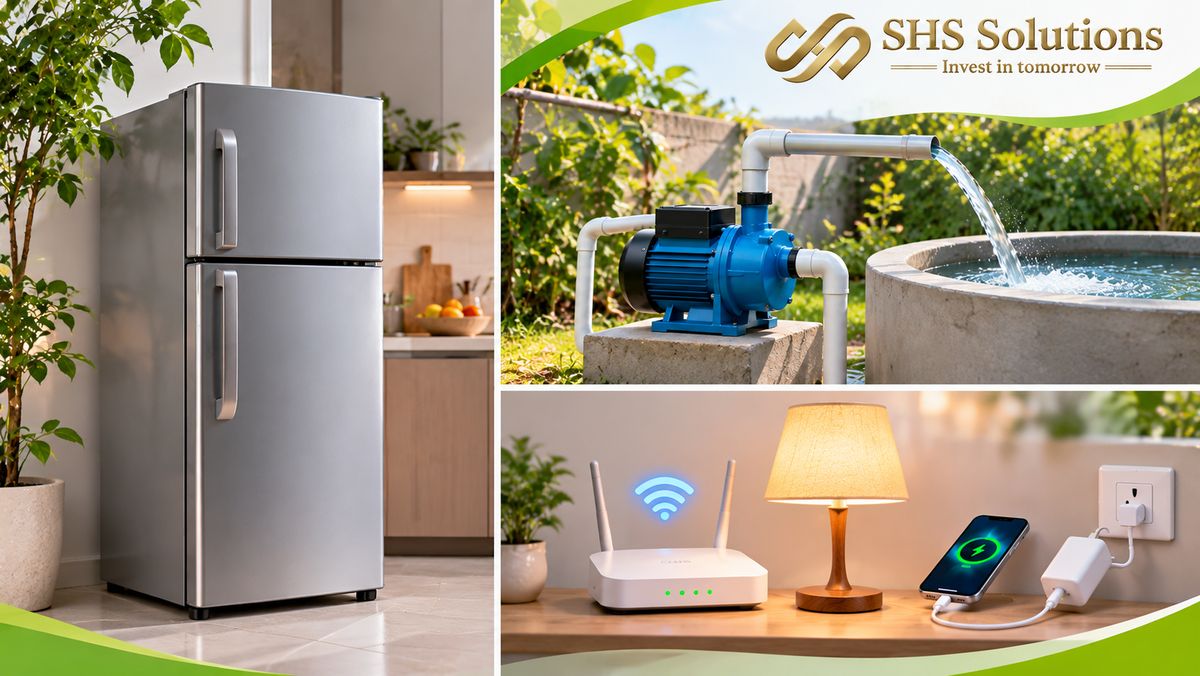
This list is called your essential loads. It matters because a backup system sized for a few essential circuits costs far less than one that tries to run the entire house, including ovens, air conditioning and pool pumps.
2. Know why ordinary solar panels do not keep the lights on
This surprises many homeowners. A standard grid-connected solar system is designed to switch itself off when the grid goes down. This protects utility workers who may be repairing the line. So panels alone, however many you have, will not power your home during a blackout.
To keep going, you need a system with a backup-capable inverter and a battery, set up to separate your home from the grid safely when the grid fails. If you already have solar panels, this is often something that can be added later, depending on the inverter you have. Ask your installer before assuming either way.
3. Add solar batteries (home battery storage)
A battery stores the electricity your panels produce during the day, so you can use it in the evening, overnight or during an outage. When comparing solar batteries, two numbers matter:
- Capacity (kWh) tells you how much energy is stored. This decides how long you can run your essentials.
- Power output (kW) tells you how many appliances can run at the same time.
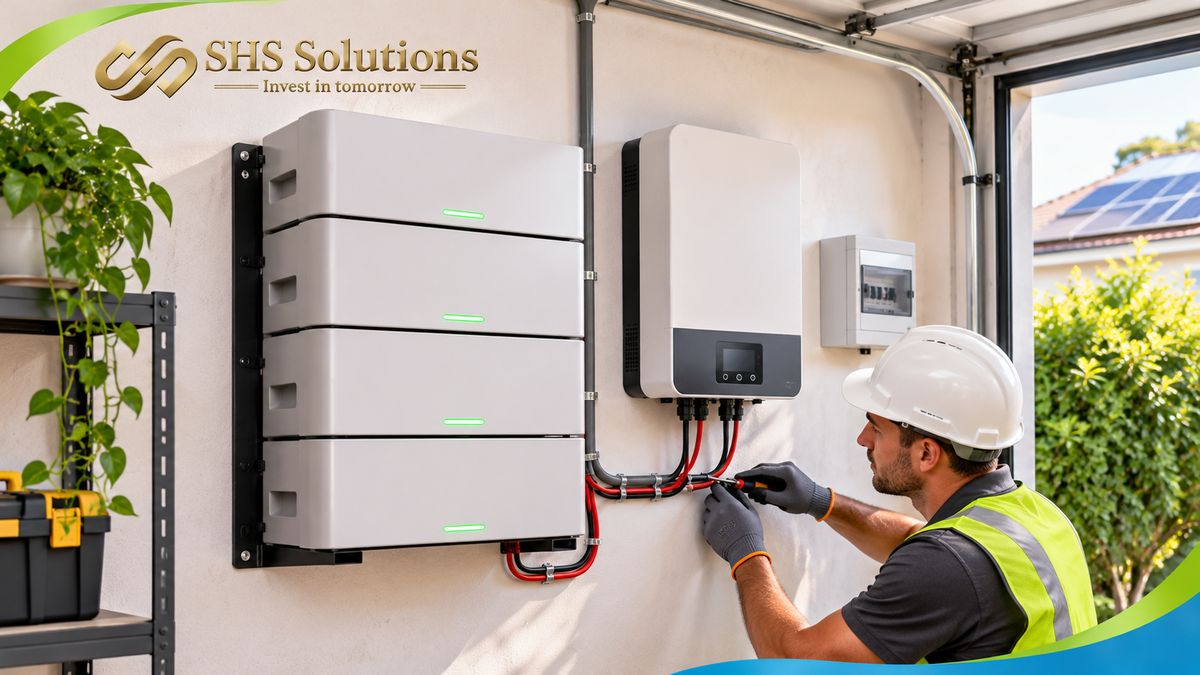
Also ask about battery chemistry, the warranty length, how many charge cycles it is rated for, and whether the system can be expanded later. Lithium battery racks, for example, are modular, so you can start small and add capacity. SHS Solutions offers lithium-ion home battery storage with a 10-year warranty on its battery racks. Our battery systems page lists the range.
4. Choose your level of backup
There are three common approaches. Picking the right one is mostly a question of budget and what you want to protect.
| Level | What it does | Best for |
|---|---|---|
| Essential-loads backup | Keeps selected circuits (fridge, lights, router, pump) running | Most homes; the best value |
| Whole-home backup | Supports most of the house, with limits on heavy loads | Larger homes and households with medical needs |
| Off-grid solar system | Runs fully independently of the grid, with panels, batteries and often a generator as a safety net | Remote properties, farms and fincas with poor grid access |
A well-sized system matches your actual use, rather than the biggest battery on the market.
SHS Offers Offgrid systems where normally the entire house is backed by your solar battery solution
5. Pair the battery with solar panels
A battery on its own will run flat after a day or two of a long outage. Solar panels with battery storage solve this: the panels recharge the battery every sunny day, which can stretch your essential-loads supply well beyond 72 hours. The Algarve's sunshine helps here, though output still varies with the season, shading and weather, which is why the system should be designed around your own consumption and roof.
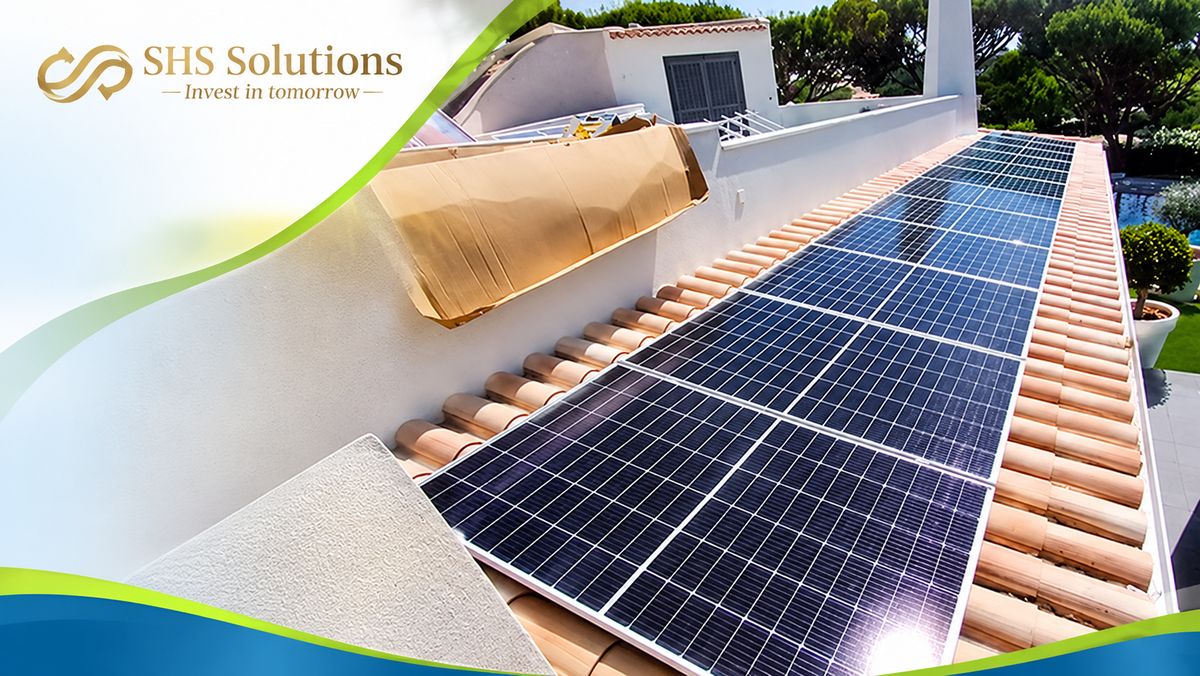
If you are planning solar anyway, designing the system as battery-ready from the start is usually simpler and cheaper than adding it later. Our guide to solar panel installation in Portugal explains what to check before you sign a quote, and our solar PV systems page covers the microinverter-based option.
6. Keep the non-electric basics ready as well
A battery backup system is not a substitute for a basic emergency kit. It complements it. Authorities that promote the 72-hour approach generally suggest covering these categories, adjusted to your household size:
- Drinking water and non-perishable food
- Medication and a first-aid kit
- A torch or lantern, spare batteries and a battery or wind-up radio
- Power banks, copies of important documents, some cash and written emergency contacts
- Items for babies, older relatives and pets, if relevant
For the exact current guidance, check the European Commission's preparedness pages and the Portuguese civil protection authority (ANEPC).
7. Plan for hot water, heating and cooling
These are the biggest electricity users in a home, and the hardest to cover with a battery. Be realistic about them. Many homeowners keep air conditioning and large electric heaters off the backup circuit, or run them only while the sun is shining. Some solar hot water systems need little or no electricity to heat water, depending on how they are designed, which makes them a useful low-power backup for hot showers. Ask your installer which of your appliances will run on backup, and which will not.
Once the system is installed, test it. Run a controlled power cut once a year, check the monitoring app, and make sure everyone in the household knows where the key switches are.
What to do next
You do not need to prepare for the worst-case scenario. You just need to know your home can cope with a long outage without stress. A short site visit is usually enough to check your current system, list your essential loads and suggest a sensible battery size.
Ready to make your home blackout-ready? Contact SHS Solutions for an assessment of solar batteries and battery backup systems in the Algarve and across Portugal.
Frequently asked questions
Is a 72-hour emergency kit compulsory in Portugal?
No. The EU measure is a recommendation to member states and households, not a legal requirement. It encourages people to be able to look after themselves for at least three days.
Can solar panels power my home during a blackout?
Only if the system includes a backup-capable inverter and a battery. A standard grid-tied system and even Hybrid inverter for batteries switches off when the grid fails, for safety reasons.
How long will a home battery last in a power cut?
There is no single figure. It depends on the battery's capacity, which appliances you run, and whether your solar panels can recharge it. That is why we size systems around your essential loads.
Does SHS Solutions install off-grid solar systems?
Yes. SHS provides solar off-grid battery systems and lithium battery storage in Portugal. Contact us to discuss your property.